Tribble platform
One governed platform for buyer answers that win.
Tribble helps revenue teams answer RFPs, DDQs, security reviews, live buyer questions, and follow-up with approved knowledge, CRM context, security evidence, past proposal work, and outcome history attached.
Enterprise teams using Tribble include




See Tribble reviews on G2
Tribble has 175 reviews, a 4.7/5 rating, and 21 Fall 2026 G2 badges across RFP, AI Sales Assistant, AI Meeting Assistants, AI Proposal Generator Tools, and Sales Analytics categories.



How approved knowledge, deal context, and outcomes stay connected
Buyers do not ask whether your team owns an RFP tool, sales copilot, or knowledge base. They ask product, security, pricing, implementation, and risk questions. Tribble keeps the buyer question, account context, approved claim, source, reviewer, and outcome together so every workflow answers from the same governed system.
Tribble understands where your buyer is.
CRM fields, call notes, buyer priorities, active objections, competitors, proposal status, and security requirements shape the answer before drafting starts.
It governs what the team can say.
Policies, product docs, security evidence, case studies, past proposals, and SME edits become reusable claims with source, owner, and review context.
It learns what moves deals forward.
Approvals, corrections, objections, reuse, follow-up edits, and win-loss context improve the next response without losing governance.
One platform for jobs across the deal cycle
Enterprise buyers compare Tribble against RFP software, revenue intelligence, sales enablement, compliance evidence tools, and generic AI. The difference is that Tribble does not stop at one category. It governs the answer, the evidence, the workflow, and the learning loop across all of them.
| What Tribble adds | The category | What it does well | |
|---|---|---|---|
| RFP software | Deal context, source evidence, review routing, sales follow-up, CRM context, and answer-level outcome learning | Responsive, Loopio, RFPIO, Qvidian, QorusDocs | Manages response projects and content reuse |
| Revenue intelligence | Uses that deal context to answer the next buyer question with approved evidence, citations, and the right expert involved when needed | Gong, Clari, Salesforce | Explains what happened in calls, pipeline, and CRM |
| Sales enablement | Gives sellers direct answers with citations, approval context, proposal history, and live buyer support | Highspot, Seismic | Organizes content, plays, and enablement material |
| Security and compliance evidence | Turns approved security and compliance knowledge into buyer-ready answers for DDQs, RFPs, procurement, and live sales conversations | Vanta, Drata | Collects controls, policies, and compliance evidence |
| Generic AI | Operates the governed response lifecycle: retrieval, permissions, approved claims, citations, reviewers, export, audit, reuse, and outcome learning | Chatbots and copilots | Drafts text from a prompt, file, or connector |
Every team starts somewhere. The advantage is a shared answer layer.
Proposal teams, sales teams, security teams, and revenue leaders can start with the workflow hurting most. Tribble connects those entry points because the same approved answer, source, reviewer, and outcome should travel across the deal.
Create accurate, sourced, reviewed, export-ready answers.
For RFPs, DDQs, security questionnaires, and proposals. Completed responses become reusable intelligence for sales calls, follow-up, CRM updates, and future questionnaires.
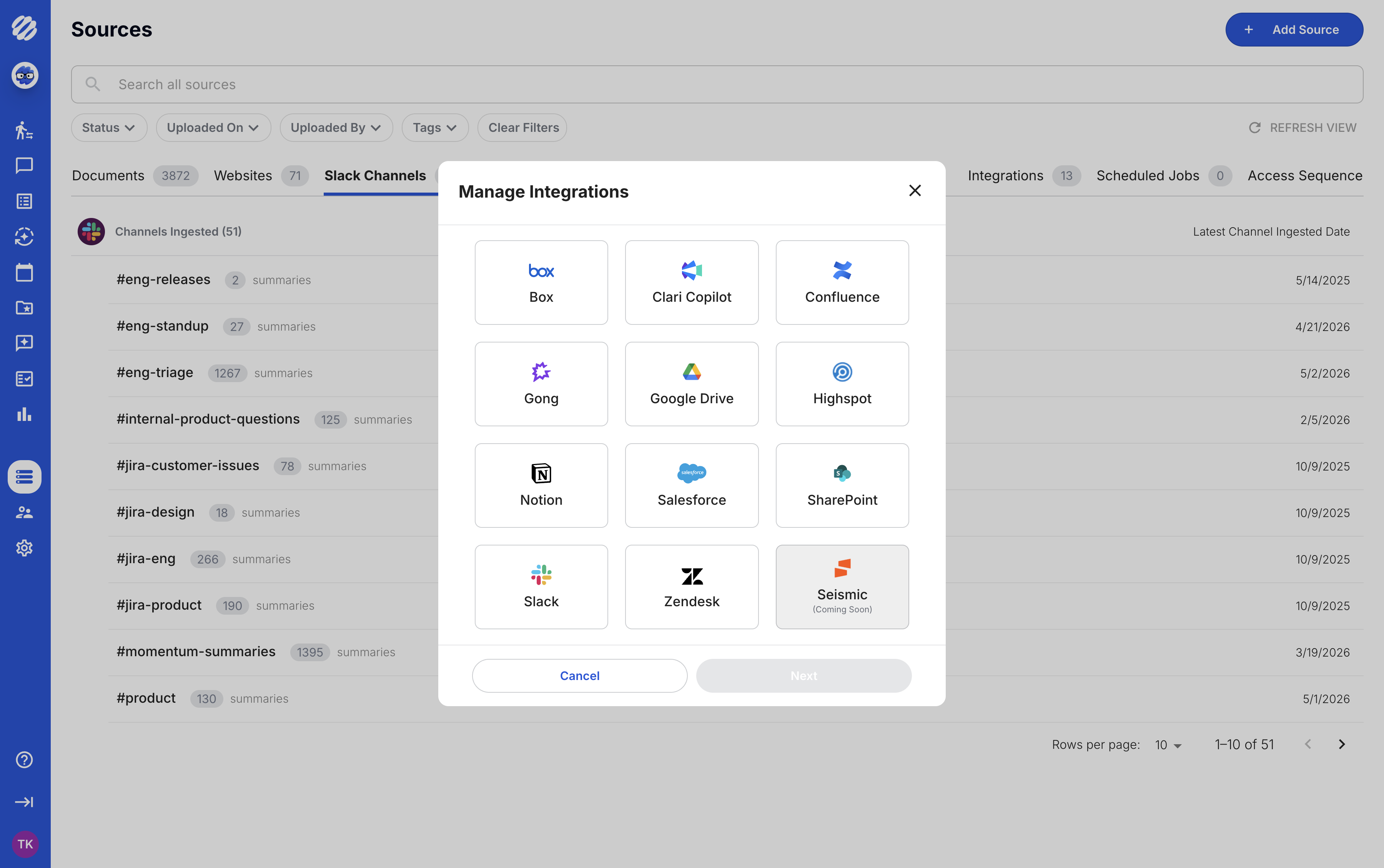
Deliver approved answers in Slack, Teams, and daily revenue workflows.
Without becoming another place to search. Source, owner, permission, and confidence context stay attached when the answer moves into proposals or buyer follow-up.
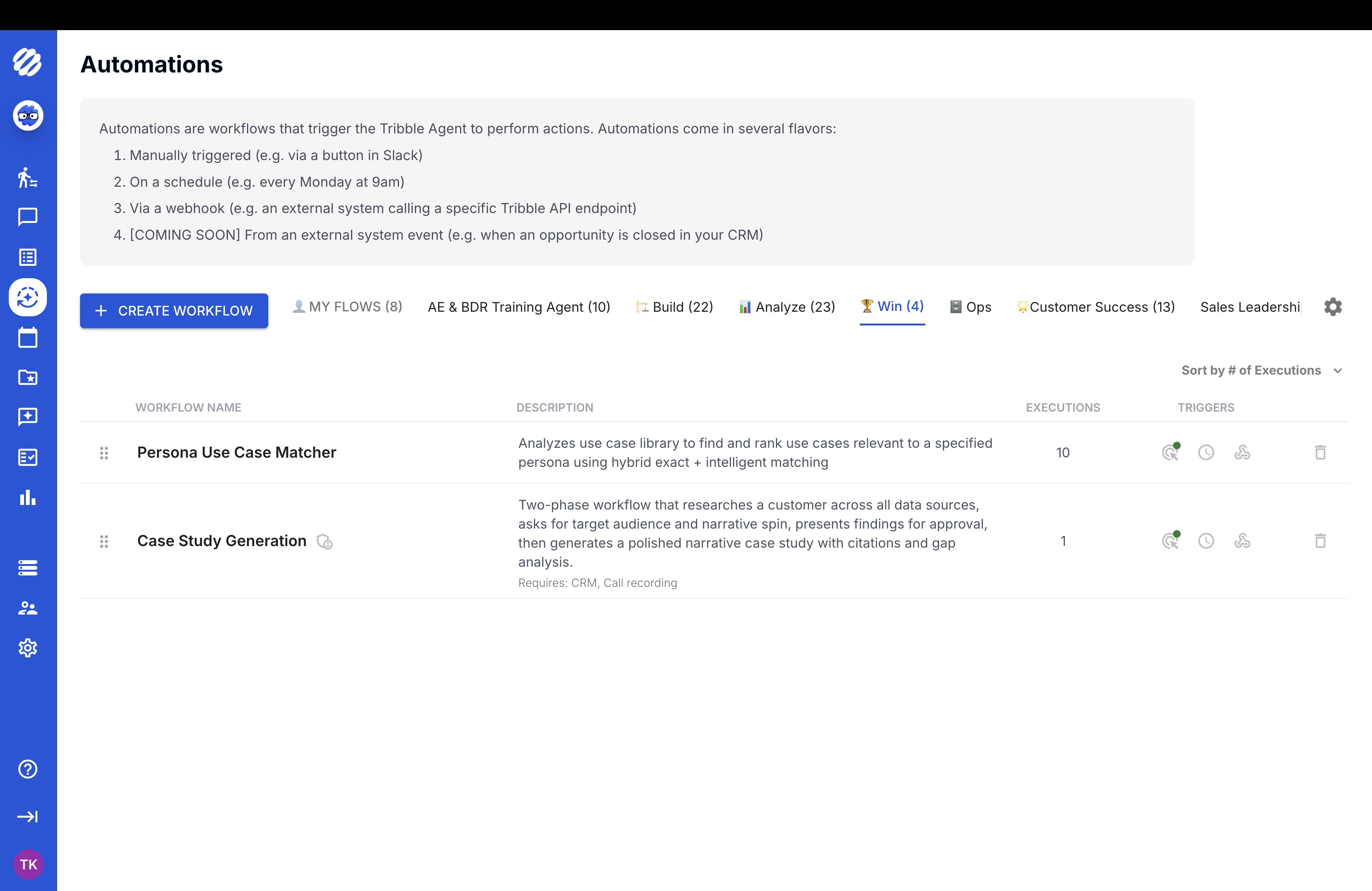
Prepare for meetings, answer live questions, draft follow-up, update CRM.
From governed knowledge. Deal context stays connected to proposal history, security evidence, and expert review behind each answer.
Connect knowledge, workflows, governance, and buyer learning in one system.
Every approved response can improve the next proposal, call, security review, and knowledge answer.
What to look for in a governed AI platform for buyer answers
The bar is higher than content search or text generation. The platform has to preserve evidence, ownership, human review, and context across every buyer-facing response.
Answer governance
Can the platform connect buyer questions, approved claims, sources, owners, permissions, CRM context, call context, proposals, and outcomes?
Workflow breadth
Does the same intelligence power proposal automation, AI sales agent workflows, knowledge access, DDQs, security reviews, and follow-up?
Human control
Can teams inspect sources, approve external answers, route exceptions, control permissions, audit changes, and prevent unsupported claims?
Compounding learning
Do SME corrections, repeated questions, call objections, approved responses, and win-loss outcomes improve future answers across the system?
Engage your buyer through every channel with consistent, winning answers
A buyer question may arrive as an RFP requirement, a DDQ row, a security review, a live sales objection, a follow-up email, or a Slack question from a rep. Tribble keeps the intelligence shared while each team works in its own surface.
AI Knowledge Base
Revenue, security, product, and customer teams ask questions in Slack or Teams and get sourced, permission-aware responses from approved knowledge.
AI Proposal Automation
For RFPs, DDQs, security questionnaires, and proposals, response teams draft from approved knowledge, then send exceptions to the right experts.
AI Sales Agent
Deal teams prepare for buyer conversations, answer live questions, draft follow-up, and update CRM from the same response intelligence that powers proposals.
| AI Knowledge Base | AI Proposal Automation | AI Sales Agent | |
|---|---|---|---|
| Input | Internal question, account context, source documents, policy updates | Questionnaire, past responses, product docs, policies, call context, CRM context | Opportunity, call history, CRM fields, objections, next steps, open proposal work |
| Output | Short answer, citations, source confidence, owner context, readiness gaps | Source-cited draft, confidence context, SME review path, export trail, win theme | Meeting brief, live buyer answer, talk track, follow-up draft, CRM update diff |
| Learns from | Corrections, repeated questions, SME decisions, accepted language | Approvals, rewrites, rejected claims, answer-level outcomes, missing evidence | New objections, competitive signals, deal outcomes, follow-up edits, MEDDIC gaps |
Responses are only useful when the claim, context, and evidence stay together
For regulated teams, speed is not enough. The response needs approved claims, source evidence, permission context, expert review, and audit history.
What Tribble keeps in sight so teams can trust and reuse the response
- Approved answer. The wording a team can use with a buyer.
- Source proof. The documents, calls, policies, and prior responses behind the claim.
- Review ownership. The expert or team responsible for high-stakes answers.
- Reuse context. Where the answer can be used next: proposal, follow-up, CRM, or knowledge base.
Every approved response makes the next one stronger
Calls, proposals, security reviews, and SME edits create valuable context. Tribble turns that context into reusable response intelligence for the next buyer question.
Start with one team. Expand with proof.
Connect the sources, prove value in one live workflow, then expand to the teams that reuse the same answers.
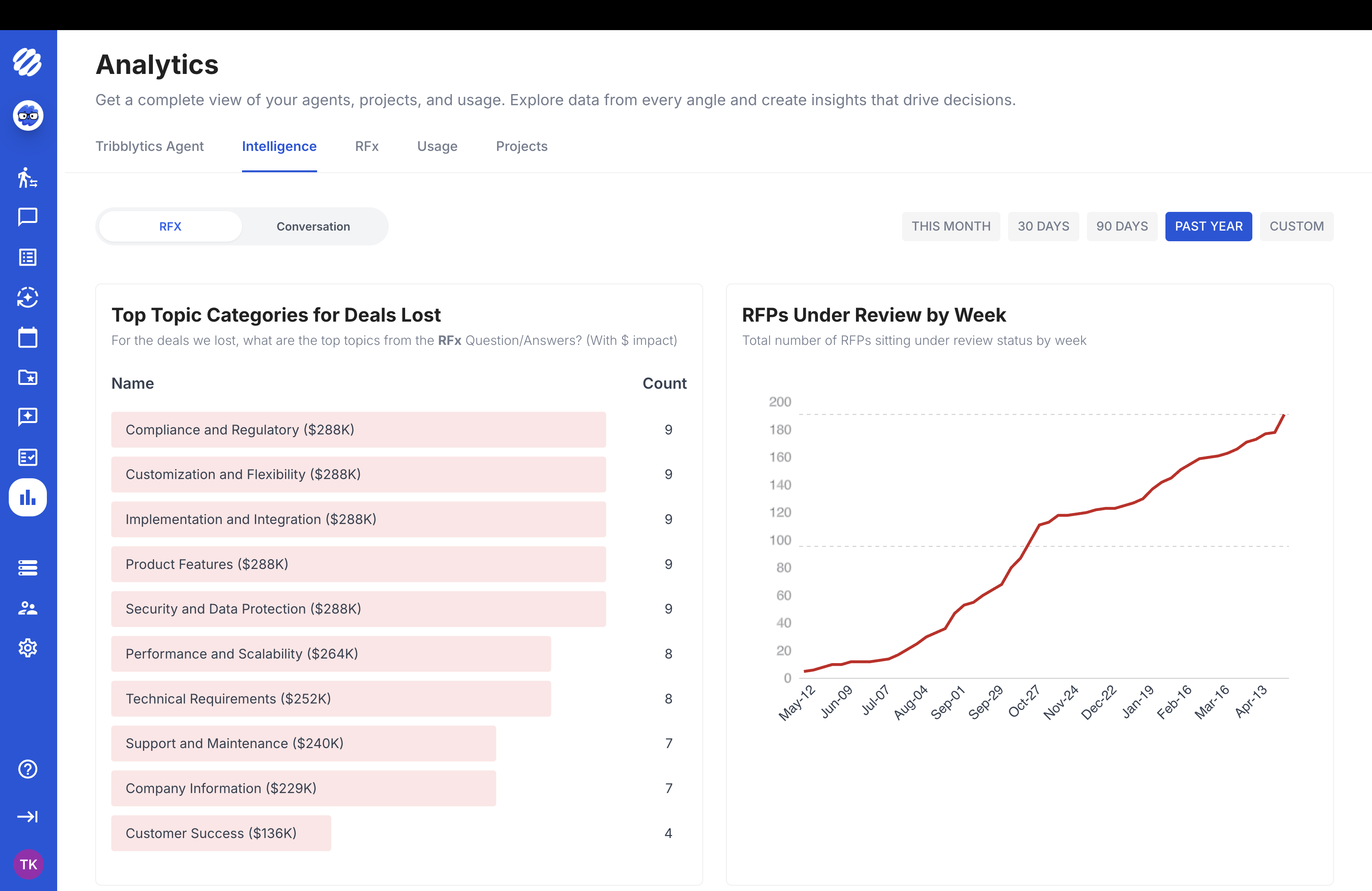
Connect sources
Bring in documents, CRM, call data, collaboration tools, and past responses.
Map ownership
Set permissions, SMEs, review routing, and source authority.
Run the first workflow
Use a live RFP, DDQ, security questionnaire, or buyer-question set.
Expand surfaces
Reuse approved answers across proposals, sales agents, and knowledge delivery.
Estimate ROI
Model time savings, faster response cycles, and expansion value with your own numbers.
Compare the stack
How Tribble differs from RFP software, revenue intelligence, enablement, and generic AI.
Know how the governed answer layer works before you see it live
Platform questions buyers ask before a walkthrough
The six asked most often before a first call.
What is the Tribble platform?
Tribble is the governed answer intelligence layer for revenue teams. One platform connects AI Proposal Automation, AI Sales Agent, and AI Knowledge Base so every buyer-facing answer is sourced from approved knowledge with citations, confidence, and reviewer control.
How do the three pillars work together?
AI Knowledge Base holds approved sources and claims. AI Proposal Automation drafts RFPs, DDQs, and security questionnaires from that knowledge. AI Sales Agent uses the same governed answers in meeting prep, live calls, and follow-up so marketing, security, and sales stay consistent.
What is the Brain?
Brain is how Tribble continuously improves answer quality: it learns from reviews, outcomes, and new source material while staying inside your permissions and governance rules, not a black-box model trained on your private data for other customers.
How does Tribble keep answers governed and citable?
Every draft can show source attribution, confidence context, and routing to the right reviewer. Permissions follow your knowledge sources so teams answer faster without losing auditability.
Who is Tribble for?
Proposal managers, sales engineers, security and compliance reviewers, and revenue leaders who need more RFPs and questionnaires completed without hiring linearly or risking uncited AI answers.
How is Tribble different from point RFP tools or generic AI?
Point tools often stop at a content library. Generic AI drafts without enterprise evidence control. Tribble unifies proposal, sales, and knowledge workflows on one governed graph so answers stay consistent across channels.